Friday, February 13, 2015

Leukemia

In the first unit of the Disease course, which is called Body, the class went over how diseases affect the body, and for the math portion we went over the how units are measured. For the action project, the class was assigned to research a disease and interview someone we know that has been affected by that disease. I chose to research leukemia because it has affected someone very close to me, but I still didn't know much about this type of cancer. It was interesting to learn new things about what was going on in this persons' body, but also seeing how it also affected them as a person . Although the research was challenging, it was also cool to learn new things about this disease. The life size drawing showing which parts of the body are affected was also fun, and crazy to see how much some diseases can spread. Thanks to this unit and project, I now have a better understanding on how body systems work and how they can die out when hit with a disease.


Izzy is 25 year old healthy, college student, but 6 years ago that wasn’t the case. Christmas eve 2009 was the day she was diagnosed with Leukemia. As she was getting ready to go to bed the night before the last day of work, she felt a bit under the weather, with a cold, headache and feeling a little nauseous. She really didn’t think much of it and took some medicine, hoping she would feel better by morning. The next day on her way to work, walking up the train steps was a huge problem for her. She was out of breath by the time she reached the street, along with having some chest pain. The chest pain scared her because her father had experienced a heart attack the year before, resulting to a open heart surgery. Along with still feeling nauseous and being out of breath for awhile, she decided to finally go to the emergency room. Although the doctors had done tests, they found nothing. It wasn’t until one doctor noticed how pale she was that he decided to take a blood test just in case. The results changed everything. It turns out she has Acute myeloid leukemia (AML). The cancer develops in the bone marrow, then makes its way to the blood, and then the lymph nodes and other parts of the body. It’s also known as the cancer of white blood cells. The cells of people who have this type of cancer cells do not work properly and are unable to accomplish what normal cells can do, like fighting off an infection. Leukemia also isn't just one disease. There are four. Those are called acute lymphocytic leukemia (ALL), acute myeloid leukemia (AML), chronic lymphocytic leukemia (CLL), and chronic myeloid leukemia (CML).  The blood cells of people with these 4 types cause the Lymphatic system to not function correctly, along with the Immune system, as the body is weak to fight off infections.

Treatment started right away with chemotherapy, something she recalls being really tough. “I was constantly throwing up and fainting. I also had loss of appetite which was so hard especially when I knew I had to eat to keep my strength up, but being nauseous all the time didn't help either.” Along with that many risks and side effects include, anemia, fatigue, higher risk of catching an infection and sensitive to bleeding.

Although anyone anywhere is at risk of being diagnosed with Leukemia, it is more common to be found in developed countries, and race also plays a big part. It is found that Hispanics, especially under the age of 20 are at a higher risk of Leukemia. It is also the most common cancer to affect children. Leukemia is not transmittable since it’s a type of cancer. Research has been done to figure out what causes leukemia, but the closest answers researchers can get is that it links to environmental problems dealing with radiation along to exposure to different types of chemicals, your lifestyle which includes diet, and certain types of infections.


Cancer doesn't just affect the body of the person that it hits, but also the person as a person. I caught on to one thing that I think proves that. “Another symptom that wasn't the worst but hard on me was losing my hair. I knew it was going to happen but I'll never forget the feeling I felt when the first chucks of my hair fell out. I cried! I laughed about it later on that night but being bald for months made me feel self conscious. I embraced it and realized that bald was beautiful.” I hope you understand more of what Leukemia does to your body by looking at my poster.

RD. Photography. Body with Leukemia. 2015


Tuesday, February 10, 2015

What is soul?

In unit 1 of the Forbidden Books course, which is called Politics, the class went over the past civilizations of ancient Greece, studied books that were once banned, and also went over many vocabulary words that were unfamiliar, but important when discussing all those topics. We also learned about Socrates, a Greek philosopher, who is also known as being the founder of western philosophy. Although he never wrote down any of his principles or ideas, we were still able to understand them through the writing of his student Plato. Socrates and his ideas were considered "dangerous", and therefore led to his death, because he was no longer able to share or practice his own principles. There is also a method named after him named the Socratic Method. It's a discussion between two people filled with questions that require deep, critical thinking. That also plays a big role on why many people were not a fan of Socrates. They wouldn't enjoy being asked questions, because sometimes they wouldn't have all the answers. For this action project, the class was assigned to create a dialogue following the Socratic Method, while discussing a theme or question. I decided to to discuss the question "What is Soul"? The human soul has always interested me, and leaves me with some deep questions that I'm still trying to find answers to, so I thought it would be interesting to follow the Socratic Method, while going over this question. Although interesting, it was still challenging trying to come up with some deep critical questions, but as I was getting more into it, the questions came more naturally. Thanks to this unit and project, I now know why some writers’ work can be considered "dangerous" and how to involve some deep thinking in discussions. I hope you enjoy the discussion below!


P- Hey! What are you doing?

V- Nothing much. Just reading Chicken Noodle Soup for the soul.

P- For the soul? Do you even know what a soul is?

V- Everyone knows that it’s something inside you, that makes you unique from everybody else, and when your body finally dies and shuts down, it wanders.

P-Yes, but the word “soul” in Hebrew literally means “a creature that breathes”, and in Greek it means an “entire being”, it’s not something inside you, it is you! So it would be impossible for your soul to wander, right?

V- Well If you put it that way, no it wouldn't, but I’m sure it has to go somewhere, when face to face with death.

P- Not necessarily. Even though I have never experienced a near death event, or have been in a comatose state, I find it hard to believe that some people claim to have seen their bodies, while watching as their soul. Because if their soul were to really escape, that means there is absolutely nothing left of them, which makes them dead. They might still be able to hear and even feel things as their brain is still alive though. So tell me, would it really be possible for your soul to wander once the body is dead?

V- Well no. And if you were to look at the definition of the word soul it has the word “living” or “breathes”.


P- Exactly! Have you noticed the term “brain dead”?

V- Yes I have, but I have always wondered why it’s called that.


P- Wouldn't it just be better to pronounce someone officially dead, rather than brain dead, since the mind is what guides us? Well that comes to show that there’s something else in our body that’s keeping us alive. The erasure of the mind might stop us from feeling and remembering, but your heart is still pumping, which means you’re still living. It isn't until the body completely shuts down, that the soul dies.


V- It’s nice to know that we are more than just the outcome of brain neurons working together.

P- Of course we are. Although the mind can be controlling at times, sometimes we have to separate ourselves from it, and follow other major parts of the soul.

V- What would those be though?

P- Your heart, body, actions, emotions, passions, breath and way of thinking. Those all make up the human soul.

V- So I AM a soul, without my body, there wouldn't be a soul.


Tuesday, January 13, 2015

Moonrise Kingdom

In the 3rd unit in the Ollywood course, which is called Post-Production, the class learned about the different techniques used to complete a film, which includes the sound effects, special effects, editing, and soundtrack. For our final action project, we were assigned to create a movie critique, in the form of a podcast including those elements, and also choosing an approach that we were going to be looking through the eyes of. I decided to choose Moonrise Kingdom directed by Wes Anderson. I also chose to take the feminist approach, studying carefully how the women were being portrayed in the film. At first I had a difficult time choosing which approach to take while watching. After a while of studying the film I finally was able to find the points I needed in order to look into the movie with that approach. Thanks to this unit and project, I learned how to point out all these post production elements, and now know the big impact that they have on films.


Hey everyone! Thanks for taking the time, to listen to my review of Moonrise Kingdom, a 60s romantic-comedy film, directed by Wes Anderson in 2012.

I will be critiquing this film looking for elements of post-production, which includes editing, sound effects, special effects, and soundtrack. I will be analyzing these elements through the feminist approach. Which means I will be studying how women are being portrayed in this film.

Sam Shakusky, played by Jared Gilman, is the protagonist of the film. Sam is a 12 year old member of the Khaki scouts at Camp Ivanhoe. The camp takes place on a island called New Penzance in New England. Suzy Bishop, played by Kara Hayward, lives on the island, and is also 12 years old. Sam and Suzy met in the summer of 1964. Their budding love started with writing letters to each other back and forth. In these letters, they started to create a secret plan to meet up and run away together. The disappearance of Sam eventually led the scout leader to calling the police, where they then found out he was an orphan, and once they found him he would go straight to social services. Suzy on the other hand had parents who cared about her, but also had some trouble with her bizarre behavior lately. Both are eventually busted by the police and Suzy’s parents ordered that they were never to see each other again. But that of course, didn’t work because at the end we see Sam promising to come back the next day a few weeks later.

While studying the two main females in the film, I noticed one thing; they were both secretly running away to love, the daughter and the mother. In the beginning of the movie, when everyone finds out that Sam first went missing, Captain Duffy Sharp, played by Bruce Willis, visits the Bishop house. From his brief visit, I had no clue that there was a secret affair going on between him and Mrs. Bishop. It wasn't until right after he got into his car and left that we see Mrs. Bishop running out as if about to do laundry, but instead gets on her bike to go meet Captain Duffy Sharp. The next scene shows Suzy standing on the top of the lighthouse looking through a pair of binoculars, and through the use of the look-off film cut,the scene cuts to a close-up shot of the two together. This shows that Mrs. Bishop is secretive, and weak for having to hide the truth from her family. Although those qualities are fitting, I also see her as a strong woman which she demonstrates in the scene when she first finds out Suzy is missing. Mrs. Bishop walks around the house with a megaphone,showing that she’s the boss of the house.

She also wasn't just a housewife either, both her and husband were attorneys. Their wealth can be seen in the big house they own which is shown along the ocean and appears to be in the middle of nowhere. I can tell that there was use of CGI when looking at the exterior of their house because the house looked too perfect, almost like a dollhouse.

Before being introduced to the front of the house there was also some audio-linkage. While inside Suzy is listening to The Young Person’s Guide To The Orchestra on her record player, and then when the film cuts to the official introduction, we hear the actual recording, without the fuzzy quality.

In one scene ,we see both Mr and Mrs Bishop in their room at night in separate beds . This shows that she was strong enough to show him know she was no longer in love with him, but again weak because she couldn’t be honest about her affair or that she was out of love for him. I see a lot of Mrs. Bishop’s qualities in Suzy. She’s very intelligent for her age, and very tough. We see that side when she starts to stab a kid with a pair of scissors.This is the part that makes Suzy seem “equal” to Sam, according to Ryan Reft, writer of the article “Gender And Sex In The Films Of Wes Anderson”. It also says “Suzy occupies the role of violent protector more so than Sam”.

Although intelligent, she’s still a young girl, as we’re able to see when she goes through her collection of fairy tales. I also see her as a sneaky young girl, as she was able to keep the letters a secret, only until she went missing. Again like her mother though, I see her as weak. In one scene while going through Suzy’s books, Sam asked her if she was depressed and she shrugged. She then shows him a book that she found at her house titled “Coping with the very troubled child”, assuming her mother was trying to get advice on how to deal with her bad behavior. Once Sam sees this he starts chuckling, and Suzy gets sensitive and runs to her tent. Even in one scene, when Suzy is finally home, her mother is cleaning her up in, and she says “We women, are more emotional” when talking about how she understands what her daughter is going through.

We also get to see how Suzy prepared for the run away. She takes things that are more meaningful for her, while Sam takes things that are needed in order to survive out in the wilderness, he didn't bother wasting space on personal things. Suzy is also dressed a little too elegant for this runaway. She has a nice dress, Sunday shoes, and some bright blue eye shadow. She looks uncomfortable when sitting down with Sam. Sound effects in this scene was effective , as we heard the frying fish sizzling, and the chirps and water from nature, watching Sam cook it, and being able to hear it, made me want to join them.

I also noticed how Anderson put more authority into the men. Captain Duffy as the main cop, we have the scout leader, and then there’s Sam, the leader, the one who kind of saves Suzy from her miserable time at home.

The soundtrack also contributed to the natural feel to the movie. The film score was composed by Alexander Desplat. He named the soundtrack The Heroic Weather Conditions Of the Universe, giving the different weather conditions a theme song. We also hear this when making their ways through the wilderness, trying to not get caught, and when also having a conversation about what they want to be when they grow up on a rock above the ocean. Its fits the suspenseful but whimsical mood of the story.

Although different from films I usually watched, I really enjoyed going through this witty, whimsical love story, and I would for sure recommend this movie to anyone thats in for a good fantasy film.

Monday, January 5, 2015

Serving in Italian

For our final action project in the Fare class, everyone came up with ideas of how to engage our understanding of the Italian language, along with the knowledge we gained from the cooking portion of the class. We decided to invite people from the city to a dinner provided by us. Guest will be served Italian dishes made by some GCE cooks, but also get a little intro into the language. I have agreed to be a server in this dinner, along with 3 other classmates. With taking on that role, I am responsible for serving, and teaching the guests some small Italian expressions.

I would begin with the expressions, by teaching them how to introduce themselves in Italian, along with stating how they’re feeling, and where they are from. I would then move on to teaching them the name of the meal they’re about to eat, and how to order it in Italian.

Below is a conversation between a customer ordering in Italian.

Cameriere (server): Buongiorno
Cliente (customer): Buongiorno. Vorremmo un tavolo per due. (Hello, we need a table for two.)
Cameriere: Accomdatevi. Questo e’ il menu.
Cliente: Grazie
Cameriere: Che cosa predete da bere? (what would you like first?)
Cliente: lo vorrei…. ( I would like)

Asking for the bill: This is something the customer must ask for first, because in Italy it is considered rude for the server to bring out the bill first.
Cliente: Cameriere mi scusi! Il conto per favore.
Cameriere: Questo e’ il conto.
Cliente: Grazie.


Sunday, December 14, 2014

Fruitvale Station: Movie Critique

In the second unit in the Ollywood class, which is called Production, the class learned about the elements that are actually represented in a movie. Those elements include, the cinematography, lighting, actors/actresses, stage/costume design, and the different types of framing directors decide to use. For our action project the class was assigned to complete a movie critique in video form with a partner. My partner and I decided to critique the movie Fruitvale Station. A story about a young man living in Oakland with a small family, and a day that was supposed to be filled with fun, was filled with tragedy instead. Critiquing the film was enjoyable. The list provided to us was filled with good movies, so it was tough to choose. The movie was so good, that I forgot I was doing a project. At first I had a difficult time trying to create a script for the video, but once me and my partner practiced and kept going over it, everything went well. Thanks to his unit, I know now all the steps that need to be taken care of when actually producing a movie. This project also taught me how to correctly write a movie critique.


Below is the video of me and my partner discussing Fruitvale Station. Hope you enjoy!


Wednesday, November 19, 2014

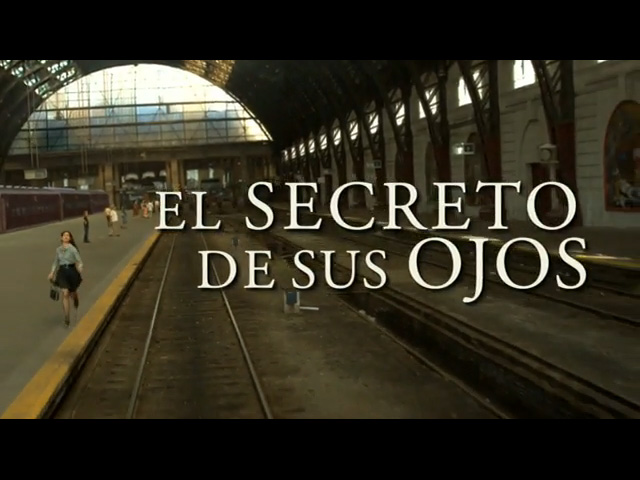
The Secret In Their Eyes.

In the first unit of the Ollywood class, which is called Pre-Production, the class learned about what must be done in order for the cameras to start filming. We went over the importance of production and costume designers. We also went over John York’s elements that make up an excellent screenplay, which includes a protagonist, antagonist, the desire, external, internal desire, the inciting incident, the journey, the crises, the climax, and the resolution. For our first action project, we chose a movie from a list provided by our teacher and critiqued it in the eyes of a movie critic. I chose The Secret In Their Eyes, an Argentine crime thriller film. At first, I had a hard time understanding the movie because it was all in Spanish, but once I found a version with English subtitles, I knew I was going to enjoy what I was watching. Thanks to this project and unit, I now watch movies differently, but in a good way. A way that gives me a more clearer understanding of how a movie is written, and how important the people working behind the scenes are.
6870891624_1c96156270_o.jpg
Lenox, Susan. "The secret in their eyes". Flicker. Yahoo! 26 March. 2012. web 14 November 2014


The Secret In Their Eyes was released in 2009. The movie follows the story of a retired judiciary employee, Benjamin Esposito played by Ricardo Darin and a judge who worked together 25 years before. The movie is based off of the Argentine crime thriller novel, La Pregunta De Sus Ojos (The Question In Their Eyes), by Eduardo Sacheri. , The Secret In Their Eyes was produced, directed and edited by Juan Jose Campanella. The story goes into a time period in Argentina known as the Dirty War that lasted between 1975 to 1983. It was a time when Argentina’s dictatorial military wanted to keep their power, so they often tortured and killed people who were against them. It was also a time when criminals were often freed and left unpunished, which also led to violent times in Argentina.

The movie takes place in Buenos Aires in 1999. Benjamin, a retired criminal investigator is trying to relive his past in his head because he wants to write a novel about the rape and murder case of Liliana Coloto played by Carla Quevedo that took place in 1974. In order to do that, he must reconnect with Irene Menendez-Hastings played by Soledad Villamil, whom he worked with during the investigation of Coloto’s case, to get her opinion on the novel. We are set back into the ‘70s when Irene starts reading the novel in forms of flashbacks. The first flashback we see is when Benjamin first saw Irene. Benjamin still remembers her as the young lady recently graduated from Cornell stepping into the office during the summer of 1972. He paid attention to her tall figure, silky hair, and of course beautiful eyes. Irene always looked very professional, but also stylish. She often wore dresses with easy-going colors, or dress suits, which went well with her stubborn, yet outgoing personality. Benjamin, a young investigator who always wore his grey trench coat and fine suits, showed that he was serious and ready for his job. But he was also young and always had good, cheesy, pickup lines for any good-looking lady that he laid eyes on, yet Irene left him speechless. Through the flashbacks we learn that the murderer was found, freed and even had an encounter with Benjamin after, but Benjamin didn't have the power to arrest him, so the killer was never seen again. Now walking into his former office, we get to see how both Irene and Benjamin aged after 25 years. Irene is seen with shorter hair, glasses, and a longer dress suit, with pictures of children on her desk, indicating that she now has a family. Benjamin on the other hand has no family of his own, has some grey hair, longer beard, and dressed more casual than professional. The costume designer and makeup artist did a fantastic job of making both characters seem older, with little things like their hair, attire, and even props like the picture to show the lives they’ve lived apart from each other.

While trying to track the murderer down during the ‘70s, Benjamin and his partner, Sandoval had many setbacks. The movie’s antagonist,Counselor Romano played by Mariano Argento, an arrogant character wanted to get the case over with, so he accused and beat a false confession out of two construction workers. Raging with anger, Benjamin confronts Romano by stating that he’ll never step foot into the offices again once he puts in a complaint. Romano responds with “You have no clue with who you’re messing with.” Benjamin and his partner, Sandoval quickly got back on their feet by reopening the case with Irene’s permission. Although always drunk, Sandoval was still a smart detective and gave Benjamin an important lead to the case. The climax happened when Benjamin finally had the murderer sitting right in front of him. Bejamin and Irene were trying to get the murderer to confess, but because of what was going on in Argentina at that time, the government let him go, something not even Benjamin had the power to change. Sandoval’s advice would also no longer be there to help him out, which puts Benjamin in a state of denial, and closes hope for him.

Irene asks him why he’s writing a novel and going back to his past, and he responds “You see? I don't want to miss another chance. How is it possible? How can I do nothing about it? I've been asking myself for 25 years and I've only been able to come up with one answer. "Forget it, it was another lifetime. It's over, don't ask." It wasn't another lifetime. It was this one. It is this one. Now I want to understand. How can someone live an empty life? How do you live a life full of nothing?” This quote shows the protagonist’s frustration and how the open case has affected his life in the past 25 years. . Re-living the case revived his desire to find the murderer with Irene. He must start a new journey of tracing this man with new tips and some he had used 25 years before.

My favorite scene shows the love that Irene and Benjamin had for each other during the ‘70s. It seems like a classic love story ending, but it wasn't until this scene that Irene finally showed her true feelings for him by chasing the train that he was leaving on. . While on the train, Benjamin runs to the rear to get a last look back at her. In his novel, Benjamin describes that scene, “He ran to the end of the train and watched as her figure, once gigantic, now shrank in his eyes, but grew more than ever in his heart.” I thought this piece of dialogue was a great way of showing how much love Benjamin still has for Irene even though he never saw her again until 25 years later. The resolution scene was very shocking, something that I didn’t imagine would happen . Benjamin finally finds out whether the murderer is alive with the help of the victim’s widower, and the love between Irene and Benjamin finally take a major step forward.

The production design team did a pretty good job depicting the settings, especially Buenos Aires, where the office is in. They portrayed a city with huge corporate buildings and cafes, on what it seems like every corner. The other setting is a small town, Chivilcoy was also very well designed. There weren't huge buildings, but rather small houses and businesses surrounding, with stray animals walking around. The people walking around were dressed differently from the city garb of Benjamin and Irene. They had presentable clothing, but less professional. Old women had dresses and head scarves, unlike the women in the city who had dress suits on. The costume designer also did a nice job depicting the fashion scene in the ‘70s. Irene was always seen with her loose long silky hair, along with her dresses. The costume designer also included popular colors during that time, including many browns, yellows and light greens. The designer made sure to include props like a record player, a typewriter and many Polaroid pictures and cameras to give off a ‘70s vibe. The film was tied into the setting of when the Dirty War was taking place in Argentina. I think the writer did a great job tying that horrible time period into the movie when the murderer was let go and never found again. I also think the camera crew did an excellent job of getting close-ups of the character’s eyes in some scenes knowing that there are many secrets, showing the inspiration for the movie title.

Juan Jose Campanella has gotten great feedback and rewards from Spain and even Hollywood. The Secret In Their Eyes received an Oscar for Best Foreign Language Film in 2009, making it the second Oscar award that Argentina has won, with the first movie winning an award in 1987, also done by Campanella. Overall, I was surprised at how much I enjoyed this movie and I wonder if I’m going to enjoy it as much when the new American version comes out, starring Gwyneth Paltrow and Julia Roberts. Everyone in the movie played their part well, including the people working on set and behind the scenes. The director did an excellent job of secretly tying an unfinished love story and murder case together leaving the audience eager to find the next part of either story.

Sunday, October 26, 2014

Can we handle an outbreak of an illness?


In the last unit in the Population class, which is called If/Then, the class went over the human population and tried to predict what the human population would be by 2050. We tried to predict with a method in math called geometric and arithmetic sequence. For our last action project, the class was asked to create a script discussing a topic that has something to do with the human population growth. The discussion had to include 2 viewpoints that was supported by evidence and real hard facts. To include the math in this project we went over, we used a geometric sequence to figure out what the human population would be in 2050. At first, I had a hard time using the geometric method, but then the whole class went over that part and I had a more clear understanding of how to use it. I also had a difficult time choosing a topic to discuss because there were so many good ones to go over. I was proud at how I went over this unit. When I had a hard time on one topic, I would take some time and go over that topic once again and just take time to focus. Thanks to this project, I now understand what the world could possibly look like if the human population became overwhelming.

Right now the human population is estimated to be about 7,125,000,000. By 2050 my class predicted that it could reach 10,715,465,520. We came up with this number by using a geometric sequence. The work is shown below.


AMK. Geometric Sequence. Photography. 2014


If the whole human population were to be crammed together in the city of L.A, many problems would develop along the way. One of those problems for example would be the outbreak of an illness. If you think of all the problems we already have in the world today, do you think we can handle an outbreak of an illness with the whole human population being so crammed together? Vaccines are available, but are also limited. That means people would be in a competition because everyone would want to get the best health care treatment they can possibly get, but its possible that since everyone wants a vaccine they can eventually run out.

Below I have a discussion between Kelly and Kate, going over the topic of the human population and the outbreak of an illness. At first they have different views, but when one goes over true facts, the other is leaning towards the other side.

Kate: Do you want this water?


Kelly: Nah. Just spill it out.

Kate: I think I’ll just drink it then.

Kelly: Why if you don’t want it?

Kate: It makes me feel guilty, because you know, there are many people that don’t have the access to it.

Kelly: True.

Kate: Did you know there are 3.4 million people who die in the world each year because they don’t have access to water, which can result to many diseases.(1) Not to mention that 1 million don’t have access to health care. (3)

Kelly: I know, but that usually happens in developing countries where the population of people is too much to handle and their aren't enough resources for people.

Kate: Well, put yourself in their shoes. Did you know that the whole human population can fit in the city of L.A? So imagine being stuck with 7125,000,000 people with the population reaching 10,715, 465, 520 by 2050 and maybe not having enough water and then people getting diseases while you have nowhere to go to get away?

Kelly: I mean like you said the whole human population would be in the same place, so why don’t the best doctors from around the world come up with new medicines and vaccines to cure these diseases?

Kate: They wouldn't be able to handle it! Like I said before millions are already dying and that’s with people using different water sources. If we used the same source eventually we would run out of it.

Kelly: Not true! Earth has enough quantities of water in our lakes, oceans, rivers and even in our atmosphere! (5)

Kate: Alright then. Well, think about the health care system? People from all over the world would be stuck together. That means that many people would be coming from countries with diseases like Malaria and yellow fever, which will catch on to people and then spread.

Kelly: But there are immunizations that fight against 27 diseases, plus there are also vaccines that are available to travelers that travel to countries that have diseases like Malaria and yellow fever. (2)

Kate: It wouldn't work! For example think about the Ebola outbreak that just made its way here.

Kelly: Exactly. Doctors are already coming up with vaccines for it.

Kate: Right. But only 4 people have been recorded having that disease here, and everyone is already feeling overwhelmed.

Kelly: The CDC and health care providers are preparing though. They know what to do. (4)

Kate: Not really. Think about it. 2 of those diagnosed people could have been prevented if the hospital was prepared enough.

Kelly: But eventually it’ll stop. Remember the swine flu? We got over it.

Kate: It’ll be hard to get over it when the whole human population is crammed together. Whatever bacteria and virus is in your body will have easy access to many other bodies that will just keep growing. Too many people die from illnesses in the world and this is without everyone being crammed together, so imagine the whole human population being contaminated in a large city, do you really think we would be able to handle this? 


Kelly: Maybe you’re right.


Citations:

1. "Water.org." Waterorg. NP, n.d. Web. 22 Oct. 2014.
2. "Immunization Issues." Vaccines in Development. National Network for Immunization Information, n.d. Web. 24 Oct. 2014.
3.Shah, Anup. "Health Issues." - Global Issues. N.p., 27 Sept. 2014. Web. 21 Oct. 2014.
4."Questions and Answers on Ebola." Centers for Disease Control and Prevention. 23 Oct. 2014. Web. 23 Oct. 2014.
5. Webster, Jim. "OLogy." OLogy. Ask A Scientist, n.d. Web. 25 Oct. 2014.\